Recent Posts

Showing posts with label March flowering orchids. Show all posts

Tuesday, March 13, 2018

Hey, Who Turned My Peristeria Yellow?

This was a surprise. The sort of thing that happens in your dreams (especially if you are a plant breeder), but only rarely in real life: a novel color form in a batch of seedlings.

Last August, Ron Determann and I scooped up a handful of nearly identical, near-blooming-sized Peristeria guttata seedlings at Carter & Holmes. Peristerias other than elata are not common in the trade so I was delighted to add some fresh genetic stock to our two existing accessions of guttata.  Naturally, I expected them to be the typical color form, white with red spots. Pictured above is one of the siblings which flowered in January. About two weeks ago, I noticed that one of the others had unusually light colored buds.

Apart from this surprising event, it seems like the genus Peristeria is in need of some taxonomic work. In our own collection of Peristeria, we have at least one individual whose identity is suspect, but the literature on Peristeria is pretty thin. In the mean time, I've selfed our yellow accession (with some of the future offspring earmarked for Mac Holmes). My experience selfing our peristerias cautions me that we've got maybe a 50/50 chance of a successful outcome -Peristeria capsules resulting from selfings often abort part way through their development.

Wednesday, April 15, 2015

Blue (Leaved) Orchids

Two recent additions to our orchid collection are miniatures with blue hued foliage, which makes them irresistible as far as I'm concerned.

Our Promenaea riograndensis is small enough to fit in the palm of my hand. It is a native of the cool humid mountain regions in Rio Grande Do Sul and Santa Catarina state in southern Brazil where it grows as an epiphyte, sometimes in association with P. stapeliodes, according to Jim & Barbara McQueen in Orchids of Brazil. The leaves are thin and pliable like many of the other moisture loving species in the subtribe Zygopetalinae. Since I don't have an elevation range for this species, I'm going to try growing it first in an intermediate greenhouse. If it looks stressed in summer I'll move it to the High Elevation House. The promenaeas are a fantastic group, well worth growing if you have the opportunity.

And then there's Dendrobium trantuanii, which has some of the most beautiful pseudobulbs I've seen. They are laterally flattened and a striking blue grey color. Even the stem sheaths are gorgeous. Denderobium trantuanii was described in 2003. It grows as an epiphyte in seasonally dry evergreen forests of northwestern Vietnam at 800 to 1,000 meters elevation. Our plants are growing in our warm greenhouse. In our greenhouse, they seem to prefer growing in small cedar baskets with a small amount of moss and chopped tree fern, rather than on a cork mount.

The flowers are about two centimeters across, waxy and glossy with a faint rosy blush. I'm looking forward to growing seedlings of these beauties produced in our lab.

Wednesday, April 1, 2015

A Mystery Orchid

This stopped me in my tracks. Flowering for the first time near the top a tree in the Tropical High Elevation House was an orchid I'd not noticed before. With its big solitary flower, it looked almost like an adolescent Pleurothallis gargantua. But the feeling that something was amiss sent me scurrying to the back up greenhouse for a ladder and then a closer look.

The handwritten label from Ecuagenera Nursery read 'Pleurothallis teaugei + gargantua.'  Odd. What did the plus sign mean? If Ecuagenera had created a hybrid, wouldn't they have labeled it with the names of the parents, separated by an 'x'? Is this plant a hybrid? Are teaguei and gargantua the parents?

Here's Pleurothallis gargantua, with its enormous solitary flower. For a quick guide to the floral parts, go here. The sepals look very much like those of our unknown orchid. But note that gargantua's rosy petals and yellow lip are very different.

And here's Pleurothallis teaguei flowering in the Tropical High Elevation House. If our unknown orchid is a hybrid, it could have inherited the rolled white petals from a teaguei. But where is it getting its rosy lip? Most likely not from gargantua or teaguei.

Flowering simultaneously was Pleurothallis marthae. With its rolled white petals and rosy lip, it appears to be a more likely contributor to the unknown orchid's genome.

But I can't be sure. The first step toward putting a name on this plant is to email a picture to Ecuagenera Nursery and ask for their data. Pleurothallid hybridization isn't exactly trending among commercial orchid growers, but I wouldn't be shocked if it were a hybrid. The larger Pleurothallids are fairly easy to pollinate. Alternatively, could this be a plant that Ecuagenera collected not in flower, and perhaps the names on the label were meant to be speculative? Could it be a species? There is nothing like it in Icones Pleurothallidinarum.

Whatever it is, our mystery Pleurothallis is a handsome plant. You can see it flowering now on the tree next to the door to the Conservation greenhouse.


Saturday, March 28, 2015

The Frogs

The frogs are flowering. The "frogs" are a group of related orchid species within the vast subtribe Pleurothallidinae. (Acronia section Macrophyllae-Fasciculatae or Pleurothallis subsections Acroniae and Macrophyllae-Fasciculatae, depending on who you ask). The hooded sepals and spongy lip give the flowers the whimsical appearance of open-mouthed frogs. They are awesome.
  
What's inside those gaping mouths? Frog flowers can be baffling if you approach them with the expectation of seeing the conventional 3 + 3 arrangement of orchid petals and sepals. Here is a close up guide to a couple of the larger species, Pleurothallis gargantua and Pleurothallis marthae.

The dorsal sepal is usually erect and often concave. The lateral sepals are fused to form a synsepal. Lying opposite each other like the two halves of a clamshell, the dorsal sepal and synsepal give the flowers their mouth-like appearance. Pleurothallis gargantua (above) is a spectacular example and the largest of the frog Pleurothallids.

Pleurothallis marthae produces flowers that seem to remain half open. In the photo above, I've pulled back the dorsal sepal so you can see the interior of the flower from above. The column is short and the stigmatic surface is at its apex, not on the underside. The tiny anther has a detachable anther cap covering a minute pair of teardrop shaped pollinia.

Above, I've cut away part of the leaf of Pleurothallis marthae so you can get a closer look at the inflorescence. The inflorescence emerges near the apex of the ramicaul, a secondary stem that looks very much like a petiole. (The actual petiole is quite short and is separated from the ramicaul by an abscission layer.) The inflorescence is subtended by a sheath, called a spathe, that mostly obscures the peduncles. From the peduncles the solitary pedicels arise, each surrounded by a clear tubular bract, and emerge from the spathe. Among frog Pleurothallids, flowers are produced singly and one at a time (as in Pleurothallis gargantua), or singly and simultaneously (as in P. marthae).

The 'frogs' in the Tropical  High Elevation House are putting on an amazing show right now. Don't miss these terrific orchids!

Saturday, March 7, 2015

Openings: Acineta cryptodonta

Here it is -the high point of my week- the long awaited opening of Acineta cryptodonta. And what a payoff. The first flowering of any unusual orchid generates some buzz among our greenhouse staff, but this plant is something special.

Maybe it's the color -the luminous pastel yellow of the flowers that keep me circling back for another look. Or the weird, almost bitter mixture of fragrances, unlike any other Euglossine-pollinated orchid that I have encountered. Is there a hint of indole in that fragrance? And the name 'cryptodonta' makes me want to open up a flower to find the hidden tooth.

It's not easy to find information about this species. Gunter Gerlach's Stanhopeinae site has some fascinating shots of the plant cloaked in moss on steep slopes in Venezuela at 1400 m. accompanied by bromeliads, aroids and gesneriads. Apparently it is also known from Colombia.

You can find our plant growing in a cedar basket in the Tropical High Elevation House growing in a mixture of moss and tree fern fiber. Be sure to look for it in the back of the greenhouse. There is a second spike forming, so if you miss it this week, check back in about three weeks.

Friday, March 28, 2014

3 Dens & a Masdevallia

I wasn't kidding about the dendrobiums. We have lots in flower. The only down side to these wonderful orchids is that their flowers don't last long--about a week. So be sure to stop by soon, or you will have missed them. Dendrobium lindleyi enjoys growing on tree fern fiber slabs (above).

Dendrobium moschatum var. oculatum produces huge bundles of cheddar cheese colored flowers at the end of long upright canes. Notice the fringe on the lip. The variety oculatum has a maroon blotch at the base of the lip.

Dendrobium farmeri, another spring bulb wannabee, photographed with the Orchid Daze display in the background. All three of the above species are native to upland areas around the Himalayas and southeast Asia, and so require a cool dry rest in winter in order to initiate buds.

Here's the wild card: Masdevallia scabrilinguis, flowering in the Tropical High Elevation House. I couldn't resist including it. Super cute and super tiny--look carefully for miniature orchids growing epiphytically in the trees in the High Elevation House!

Dendrobium Season

March is Dendrobium season around here--the month when our Dendrobium species wake up and want attention, right now. The month when we become their servants. We practically need a full time staffer just to rotate all of the flowering dendrobiums through the display.

 Dendrobium densiflorum is one of my favorites. It is the orchid family's Narcissus. In the wild it grows in upland areas (1000 to 1800 meters) in the eastern Himalayas, Nepal, Burma, Thailand, Laos, Vietnam and southwest China, in areas with a distinct dry season. Our plants never fail to flower spectacularly after a dry, bright, cool (ours get 53º night min. between Thanksgiving and New Year's) winter.

Dendrobium  densiflorum was introduced into cultivation in England by Loddiges Nursery in 1830, and it remains a popular species, and fairly common in the trade. Highly recommended if you can provide it the cool dry rest in winter and a warm tropical summer.


Tuesday, April 16, 2013

At last, Dendrobium anosmum

And, finally, the big payoff: our one hundred Dendrobium anosmum are flowering. Spectacularly.

Remember these guys? We purchased them last summer out of bloom for cheap knowing that they make an easy and awesome spring display when treated correctly. Right after the holidays we moved them to our cool greenhouse for a six week cool (53º nights) dry (water every 10 days) rest. By the end of March they had shed most of their leaves and the bare canes had big fat buds at every node.

Here they are on April 1, a little scruffy with a few yellow leaves still clinging to the canes, but not a big deal to clean up for display.

Very handsome. The flowers and sepals are covered with soft downy hairs.

And they smell terrific. Intensely sweet with maybe a hint of grape. Catch them on display in the Orchid Display House!

Wednesday, March 27, 2013

Orchids with Spurs

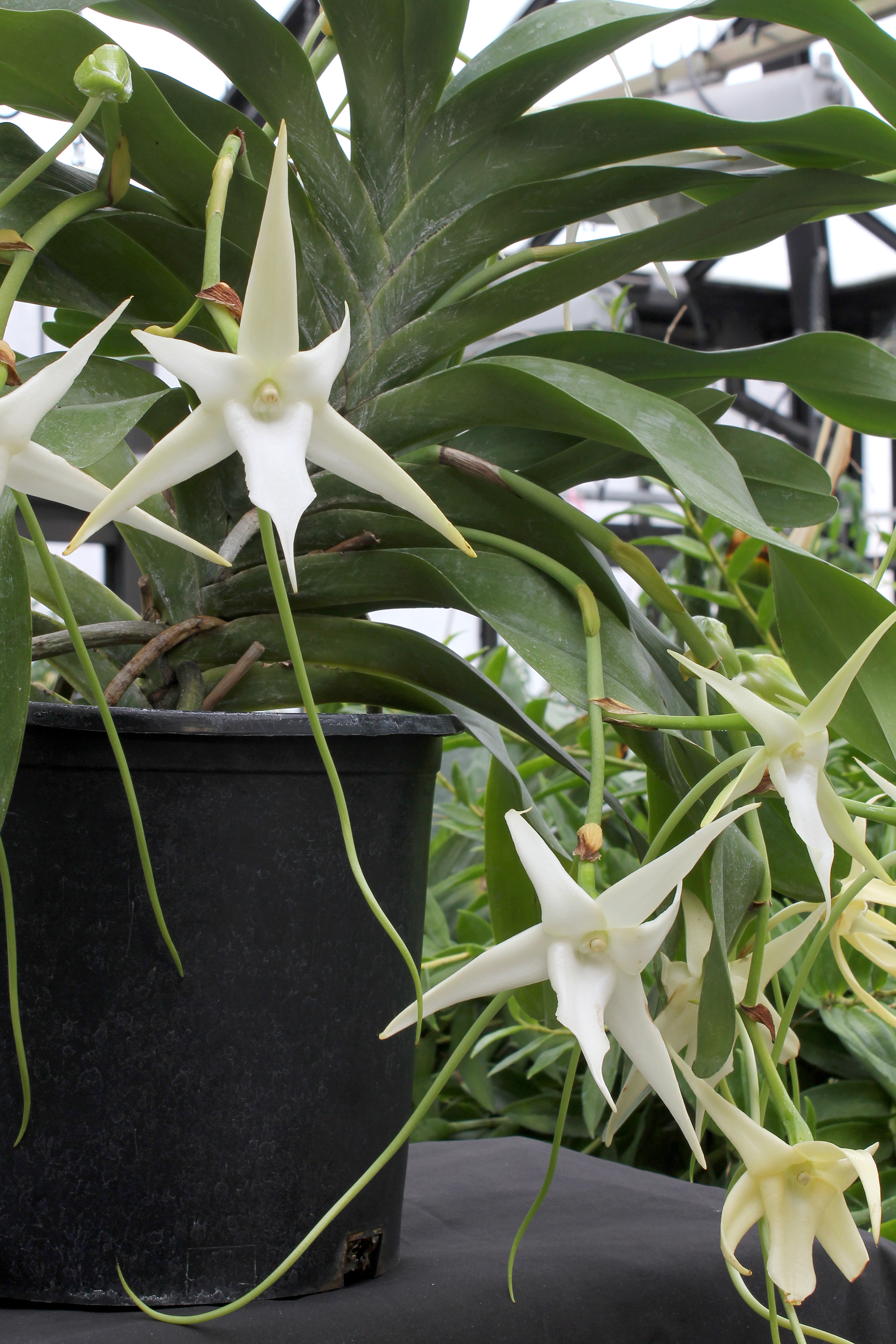
Aerangis biloba, native to Africa
As much as I love Darwin's Orchid (Angraecum sesquipedale), that handsome fellow with the floral spurs, I must confess that I think its first and second cousins are cuter.

Angraecum arachnites from Madagascar
Tiny Angraecum arachnites and Aerangis biloba have been flowering for the last few weeks in the Orchid Display House. And they are irresistible. Completely absent is the 'I dare you to look away' magnetism of Angraecum sesquipedale. Likewise the overpowering fragrance (present only at night, how obvious). You have to search for these little guys.

The spur on this flower is sharply bent at the lower end
And look; each tiny flower has a long floral spur, too. The spur is a hollow tube with nectar at its furthest end--designed to tempt hungry hawkmoths.

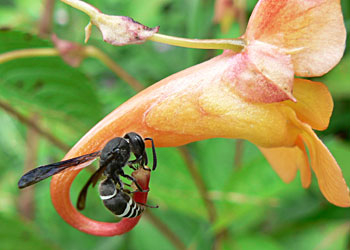
So, what's up with the spur? Lots of flowers, like Impatiens, have nectaries. Why are these so long? The amazingly long spurs of some orchids in the subtribe Angraecinae is the result of coevolution between these orchids and long-tongued hawkmoths.

Jumellea arachnantha from the Comoro Islands
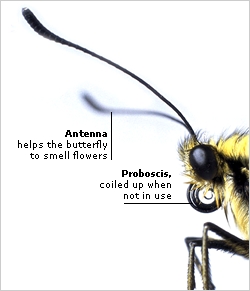
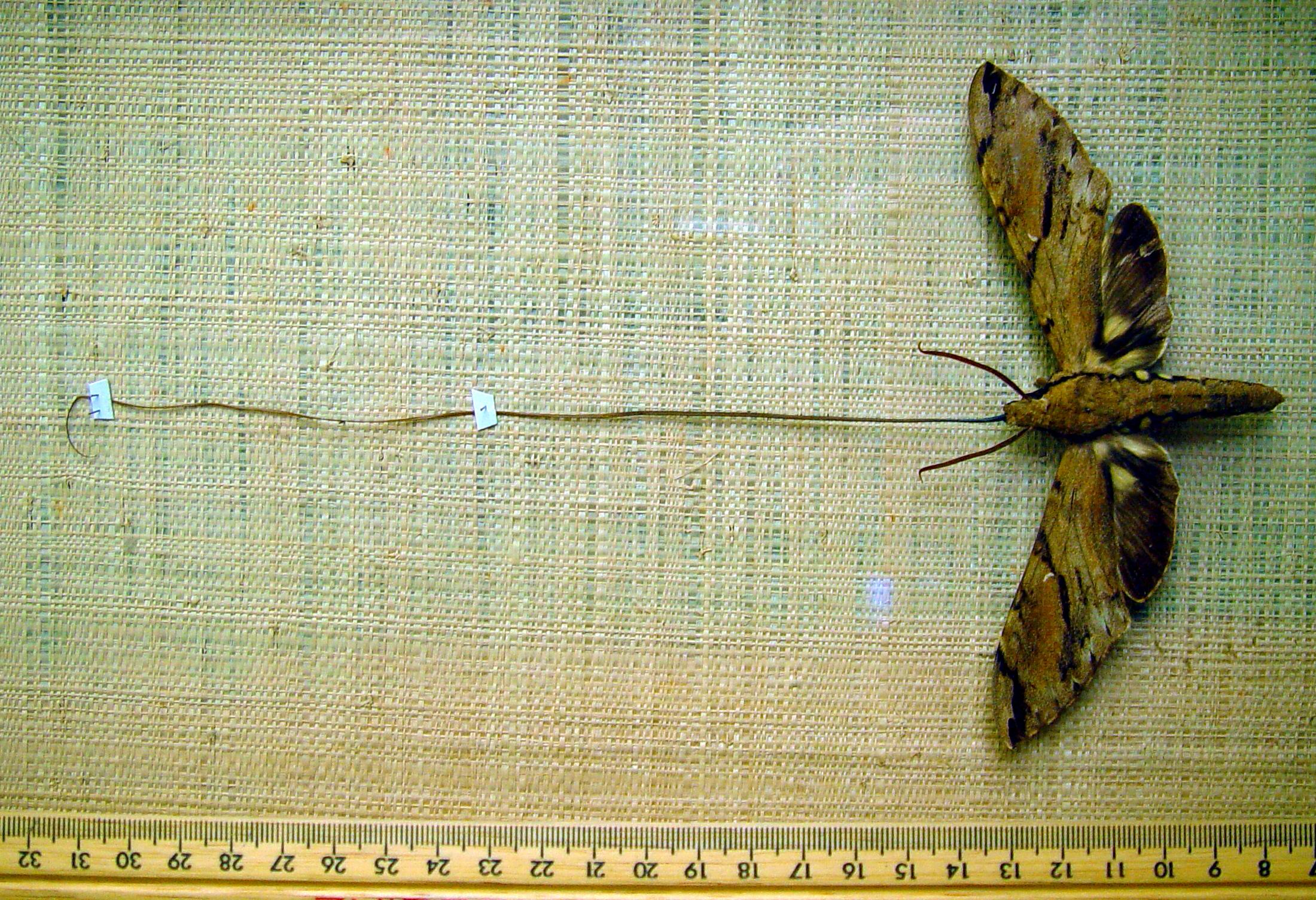
How does this happen? Pollination in Angraecum sesquipedale is more likely to be successful when the flower's spur is a little longer than the moth's tongue. Only when the moth pushes its proboscis deeply into the spur to reach the last bit of nectar does the pollinarium (the pollen masses and sticky disk) become attached to the base of the moth's tongue. Charles Darwin discovered this experimentally in the 1860's. He reasoned that moths with longer tongues are better fed and thus more likely to leave descendants than shorter tongued moths; orchids with longer spurs are likewise more likely to pass on their genes. Over many generations the orchid and pollinator become locked into a trend (sometimes described as a race) selecting for ever-increasing tongue and spur length.*

Darwin's Orchid and its pollinator are an extreme example of coevolutionary specialization--demonstrated by the almost absurd length of spur (up to 32 cm in Angraecum sesquipedale) and tongue (up to 25 cm Xanthopan morgani ssp. praedicta).

Extreme coevolutionary specialization is rare and only happens over a very long period of time in an isolated and stable environment. As Darwin noted presciently, it almost certainly puts both plant and pollinator at risk of extinction if environmental conditions change.

And conditions are changing. Should we be concerned? Are our orchids with spurs vulnerable? Absolutely. All orchids are dependent upon other organisms (pollinators, and mycorrhizal fungi for example) for their survival--our orchids with spurs are simply among the more vulnerable.

Recent studies indicate that this process may be more complicated than Darwin imagined--the coevolutionary "race" between a plant and a single pollinator species may actually involve a sequential shift among a series of pollinators.


Thursday, March 7, 2013

Neomoorea irrorata

"Vinyl with citrus" is how Tres Fromme, our Landscape Design & Planning Manager, described the fragrance of Neomoorea irrorata yesterday. I happen to think Neomoorea irrorata has a sweet lemony jasmine scent. Name That Fragrance is a popular competitive sport around here. (...Okay, maybe there is a hint of new shower curtain scent in that fragrance.)

Neomoorea is one of our Euglossine bee pollinated orchids and is closely related to Houlletia and Stanhopea. Male Euglossine bees collect liquid fragrance from orchid flowers, not as food, but most likely to attract female bees.

I never wake up in a panic in the middle of the night thinking, The Neomoorea! Where did I put the Neomoorea? It's the size of a Smart Car and about as heavy. And it's not moving. So for the time being it's staying in the back up greenhouse. However you can admire one of its relatively small offspring flowering in the back of the Orchid Display House. A Neomoorea can grow frighteningly quickly given warmth, humidity and 50% shade.

Are there any other orchid species that share this particular shade of pumpkin orange? None leaps to mind. We have lots of gorgeous orchid species and hybrids in flower now during ORCHIDdaze: Surreal Beauty. I hope to see you here this weekend!


Thursday, February 28, 2013

All Hail Paphiopedilum rothschildianum

One of the most renowned orchids in cultivation is flowering now in the Orchid Display House. Meet Paphiopedilum rothschildianum, Rothschild's Slipper Orchid. Of all of the species of Asian Slipper orchids it is thought to be one of the rarest in nature.

You can't miss its regal presence among the other slipper orchids growing on our limestone outcrop. Our plant measures about 2' in diameter and has 5 flowering spikes.

Rothschild's Slipper Orchid, which Phillip Cribb in The Genus Paphiopedilum (1998) describes as 'arguably the most handsome in the genus' was one of the most sought after orchids at the height of the 19th century orchid mania. Its story of repeated tragedy has made it a poster child for conservation of orchid habitats. Harold Koopowitz tells the story in Orchids and Their Conservation (2001).

Paphiopedilum rothschildianum occurs only on Mt. Kinabalu* on the island of Borneo. It was collected and introduced into cultivation in Europe and Britain in 1887. The original site appears to have been deliberately falsified by the collector, Sander & Sons, who gave the location as New Guinea in order to mislead rival collectors. For the next fifty years the exact location of this extraordinary orchid was a matter of conjecture.

In the late 1950's two populations were discovered at the base of Mt. Kinabalu. In 1959 many of the plants in flower were collected to decorate a bower welcoming Prince Philip to Kota Kinabalu, according to Koopowitz. The sudden reappearance of this magnificent orchid would certainly have been noted by attentive orchid collectors worldwide. Some plants ended up in cultivation, and many of the rothschildianums in cultivation today are descended from these.

In 1979 a third population was discovered in an area of Kinabalu park which subsequently lost its protected status. Plants outside the park are threatened by shifting agriculture, logging, mining and commercial development. An attempt at propagation and reintroduction onto Kinabalu in the 1980's ended catastrophically when the reintroduction site was burned.

Cribb reports that only two of the three sites remain on Kinabalu. Plants inside the park, although they are protected, are not entirely safe from determined poachers. He notes that 'collectors could practically exterminate both populations in a relatively short time.'

Follow the link to find out more about the very strange and slightly macabre pollination mechanism of some slipper orchids, including Paphiopedilum rothschildianum.

*Mt. Kinbalu has a diverse flora that includes over 1200 species of orchids, an impressive figure compared with the fifty-something orchid species in our state.


Wednesday, April 11, 2012

The Orchid Tapestry

The Conservatory Lobby features an Orchid Tapestry 
Orchid Daze 2012, Hanging Gardens was designed by Tres Fromme of StudioOutside. Tres' design for the entrance makes brilliant use of the soaring space inside the Conservatory Lobby. The orchid tapestry measures 12' from floor to ceiling. As seen from above its curving outline is broadly S-shaped as it traces a path between two opposing beds. The tapestry forms a vertical arch above the pathway in several places, allowing visitors to walk beneath it.

The Pansy Orchid (Miltoniopsis) is a terrific subject for this display. Miltoniopsis flowers are as large as those of Phalaenopsis and nearly as long lasting. The arching spikes are shorter than those of Phalaenopsis, but the plant typically produces 5 or more spikes of beautifully presented flowers. Miltoniopsis is much more tolerant of cool temperatures than Phalaenopsis, and so pairs well with Cymbidium, Dendrobium nobile, Masdevallia and other cool growing orchids that wither in the company of warm-growing Phals. 

And they smell delicious. In fact the fragrance in the Conservatory Lobby is overwhelming--in a sweetly floral way.

Oncidium Twinkle (we used two color forms: 'Red Fantasy' & 'Yellow Fantasy') makes a perfect pairing with Miltoniopsis hybrids, in texture, color and fragrance. The delicate texture of the flowers looks wonderful alongside the bolder flowers of the Pansy Orchid. I have always wanted to use Oncidium Twinkle in a display and finally had an opportunity this year.


Orchid Daze 2012, Hanging Gardens runs through Sunday April 15.


Tuesday, April 10, 2012

Shiny Rings & Orchid Things

It was pure pleasure selecting the orchids for the giant shimmering rings suspended above the Formal Bed in the Orchid Display House. When you are working with a palette of cool colors the choice of orchid varieties expands enormously.

Doritaenopsis Long Pride 'Sparks' HCC/AOS
Phalaenopsis are an obvious choice for any orchid display, with their graceful arching habit, large flowers and amazing longevity. The Doritaenopsis in our display are an intergeneric cross between Phalaenopsis and Doritis, two orchid genera so closely related as to be considered synonymous by some taxonomists. Doritaenopsis Long Pride 'Sparks' HCC/AOS is one of the most beautiful harlequin varieties that we have ever featured in our display--certainly worthy of the spotlight.

Beallara Tahoma Glacier 'Sugar Sweet'
Beallara is the name given to the offspring resulting from a sequence of crosses between the genera Brassia, Cochlioda, Miltonia and Odontoglossum. Thus, Beallara is an intergeneric hybrid, as is the Doritaenopsis above, only more complex in its genetic background.

I love the über-feminine look of these beallaras. They wear their frothy Odontoglossum lineage on their sleeves. Tahoma Glacier is pure white overlaid with rosy markings and a favorite of mine in a display where white is needed. 'Howard's Dream' is one of only a few Oncidium intergenerics with a large flower that reads purple, not red violet.

Beallara Marfitch 'Howard's Dream'
One unfortunate characteristic of some Beallara cultivars is their extremely weak flower spikes. The spike will often break under the weight of its full complement of mature flowers unless it is staked along its entire length. We learned this the hard way, of course, after an entire bed of 'Howard's Dream' collapsed prematurely during Orchid Daze 2007. So, beware. If not staked 'Howard's Dream' becomes Howard's Nightmare.

Beallara Big Shot 'Kitty Kat'
Finally, the diminutive Big Shot 'Kitty Kat,' which we just used to replace the 'Howard's Dream.' Most of the Oncidium intergenerics last about eight weeks in flower under our conditions. Since Orchid Daze lasts ten weeks we do a switchout at week eight. 'Kitty Kat' is a new variety for us and an unexpected delight.

Sunday is the last day to see Orchid Daze 2012! We are open every night until seven pm.

Monday, April 9, 2012

Our Kennel of Bulldog Paphs

"Bulldog" Paphiopedilum hybrids displayed on the Cube in the Orchid Atrium
Probably the most popular orchids on the hanging Cube in the Orchid Atrium are the Asian Slipper Orchids, the paphiopedilums, or "Paphs." These particular Paphiopedilum hybrids are colloquially known as "bulldog Paphs" on account of their broad-faced flowers and drooping petals. Among the most famous of the bulldogs is Paphiopedilum Winston Churchill. You can read more about this famous hybrid here.
The bulldog Paphs make outstanding display orchids. Their enormous shiny flowers are mesmerizing when viewed at eye level and they are extraordinarily long lasting (for Paphs, anyway)--eight weeks if you can keep the daytime temperatures at or below 72º.

Paphiopedilum species in nature are usually, but not always, terrestrial. They often grow as understory plants, or wedged into crevices in rocky limestone or granite outcrops. Adapted to an environment where there is a fairly dependable reservoir of moisture surrounding their roots, Paphs are not as drought tolerant as their epiphytic relatives, like Cattleya and Laelia, which often possess thickened leaves to resist moisture loss and pseudobulbs to store water.

Thus, in cultivation, Paphiopedilum orchids enjoy more subdued light, a more moisture retentive medium, and more frequent watering than Cattleya orchids.  They do well under lights or on an east facing windowsill. On a windowsill they will need a few hours of mild morning sun in order to flower. Most growers pot their Paphs in a mixture of fine grade bark, charcoal and perlite, often with some additional peat or milled sphagnum.

You won't want to miss these extraordinary orchids. And don't forget your camera!

The Garden is now open every night until 7 pm. The Orchid Daze display runs through April 15.
Related Posts Plugin for WordPress, Blogger...